Platform overview
The assortment intelligence platform for retail category teams
White-space detection. Sell-out trend analysis. Category benchmarking. Three capabilities built on a single normalization layer that handles real, imperfect retail data — not a clean-room version of it.
Capability 01
White-Space Detection Engine
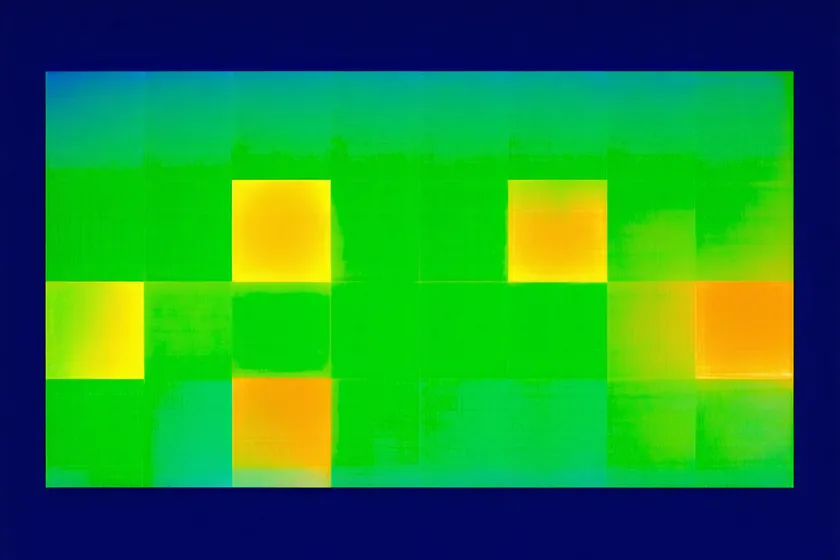
Zenline maps competitor assortments against your range and surfaces the exact SKU slots where demand signal exists but your shelves don't compete. Each gap is scored by sell-out velocity and competitor distribution breadth — so the highest-revenue opportunity is always visible first, not buried in a filter.
The detection engine ingests product catalogue data from multiple sources simultaneously: public retailer listings, EDI 832 catalogue feeds from shared suppliers, distributor product tables, and online availability signals. These inputs are cross-referenced against your own ranged SKU set at the EAN/GTIN level. Before any gap is surfaced, the system performs SKU disambiguation — resolving pack-size variants, multipacks, and channel-specific product codes that would otherwise create false positives. A competitor's 6×250ml multipack of the same beverage as your single 330ml unit is not a gap; it is a packaging variant. That distinction is resolved before the category manager sees anything.
The AI processing layer scores each confirmed gap against two independent signals: the sell-out velocity of that SKU class across competitors who carry it (derived from EDI 852 sell-through data and POS feeds), and the competitive distribution breadth — how many of the competitors in your tracked set carry that item. A gap that appears across all four benchmarked competitors with high sell-out velocity scores differently from a gap that only one niche competitor carries at low velocity. This scoring ensures the output is a ranked opportunity list, not a long tail of low-signal noise.
In practice, a category manager working on the ambient snacks range for a 340-store Central European grocer used Zenline's white-space output to identify a cluster of five plant-based savoury snack SKUs carried by three out of four tracked competitors. The combined sell-out velocity signal flagged the segment as high-momentum. The category team brought two of those SKUs to their next buyer review with a full competitive context deck, shortcutting a process that would previously have required three weeks of manual competitive audit. One was ranged within six weeks.

Capability 02
Sell-Out Trend Analysis
EDI 852 sell-through reports arrive late. POS exports carry missing weeks. Distributor feeds contradict each other. Zenline's normalization layer reconciles those gaps using timing interpolation and confidence-weighted signal merging — producing sell-out trend lines that hold even when the underlying data doesn't.
The data ingestion pipeline accepts POS exports in CSV, XLSX, XML, and proprietary retailer formats. EDI 852 sell-through reports and EDI 856 advance ship notices are parsed and aligned to the same canonical SKU timeline, with explicit handling for the reporting delay inherent in the EDI 852 standard — typically 2 to 4 weeks in European retail. Where a feed arrives with gaps (missing weeks, partial store coverage, contradictory quantities from overlapping sources), Zenline applies linear interpolation within configurable confidence bounds, flagging interpolated spans so the category manager can see exactly where the underlying data had holes and the system filled them.
The trend analysis layer applies a signal weighting model that assigns relative credibility to each source based on its historical accuracy and recency. A POS export received within three days of the reporting period carries higher weight than a distributor feed consistently arriving 18 days late. When signals from different sources for the same SKU diverge beyond a defined threshold, the system raises a data-quality flag rather than silently averaging — an important safeguard that prevents the trend line from smoothing over genuine stockout events or ranging changes that a category manager should know about.
Consider the case of a personal care category manager tracking a premium hair-care sub-segment across four major retail channels. Her distributor's EDI feeds arrived consistently 3 weeks late, and two of her direct POS connections had intermittent reporting gaps covering 15–20% of weeks. Conventional reporting showed flat sell-out — but Zenline's interpolated trend line, built from weighted cross-source signals, detected a statistically significant velocity uplift 11 days before the first clean EDI report confirmed it. She was able to pre-authorise an additional fill order before the at-risk weeks; no stockout occurred. The detection window that mattered was entirely inside the data gap her legacy system would have left blank.
- ✓ Detects velocity shifts 2-3 weeks before they appear in reports
- ✓ Reconciles missing weeks and partial data automatically
- ✓ Cross-channel aggregation with channel-weight normalization

Capability 03
Category Benchmarking
Understand how your assortment depth, brand coverage, price-tier spread, and new-items index compares against the full competitive set — not just the two retailers your team tracks manually. Identify where you're over-indexed before a buyer raises it, and where you're underlisted before a competitor moves in.
Category Benchmarking ingests competitive assortment data from a continuously updated catalogue that covers the tracked retailer set for each category. Inputs include product listing data, price point records, brand ownership metadata (to distinguish branded vs. private label accurately across different markets), and new-item launch dates — which Zenline uses to compute a freshness index showing how quickly each competitor incorporates innovation. This multi-dimensional competitive picture is computed at the sub-category level, not just the top-level category, so the benchmarking output is specific enough to drive ranging decisions rather than simply confirm what a category manager already suspects.
The AI layer maps your ranged SKUs into a structured competitive matrix and computes four core benchmark dimensions: SKU depth index (your range size relative to the competitive median), brand coverage ratio, price-tier distribution (entry / mainstream / premium spread), and new-items velocity index. Each dimension is expressed as a percentage of the competitive benchmark and colour-coded against configurable thresholds — so the category manager sees at a glance whether they're over-indexed in premium (potential ranging efficiency to recover) or under-indexed in entry price points (potential lost footfall to address).
In one example drawn from a health and wellness category team at a 220-store pharmacy chain, the benchmarking view revealed that their sun care category had drifted 22 percentage points below the competitive median on price-tier spread — specifically, they were significantly underweight in the SPF 50+ premium segment, which competitors had expanded into over the preceding 18 months. The gap had been invisible in the category team's manual competitive checks, which focused on top-line SKU count. Zenline's price-tier benchmarking surfaced it six weeks before the annual range review, giving the team time to build the supplier brief and commercial case for three new premium listings, two of which were approved and ranged for the next seasonal reset.
Data architecture
Built on imperfect data. Designed for real retail.
Most category intelligence tools fail on real retail data because real retail data is messy. Zenline was purpose-built for the gaps, duplicates, and timing delays that define actual POS and EDI feeds.
- Schema normalization across 40+ retail data formats
- SKU disambiguation with EAN/GTIN reconciliation
- Timing-gap interpolation preserving signal integrity
- Duplicate detection across overlapping feed sources
INPUT FEEDS
  POS export    (.csv, .xlsx, .txt)
  EDI 852       (sell-through)
  EDI 856       (advance ship notice)
  Distributor   (proprietary XML)

NORMALIZATION
  Schema map → canonical model
  SKU disambiguate (EAN lookup)
  Gap-fill (linear interpolation)
  Duplicate merge (confidence 0.95+)

OUTPUT
  Unified SKU intelligence layer
  Competitive assortment view
  White-space signal feed
See Zenline on your actual category data
We scope every demonstration to your existing data environment. Connect one feed and we'll show you what the intelligence layer surfaces — no substitute data, no staged numbers.